Keynotes and Workshops
Keynote 1 | Mediatization of Career Counselling
The keynote “Mediatization of Career Counselling” explores how career counsellors have long integrated communication technologies into their professional routines, and in what ways the appropriation of digital media poses specific challenges that gradually reshape the very culture, logic, and relationships of career counselling. The mediatization of counselling transforms the encounter between client and practitioner - it redefines how practitioners construct professional identity, how clients engage in meaning-making, and how institutions define quality and accountability. After the keynote, participants are invited to engage in a sociodrama, collectively staging and experiencing the processes of mediatization in career counselling - making the invisible dynamics of digital transformation tangible, relational, and discussable.
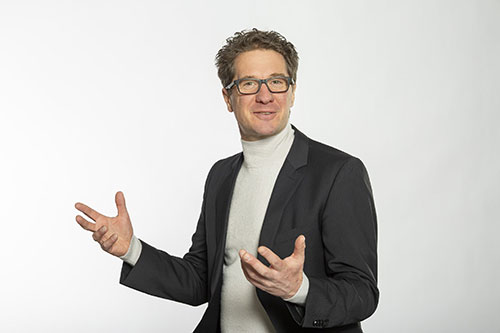
Prof. Dr. Dennis Mocigemba is Professor of Counselling Sciences with a focus on Professional and Digital Counselling at the University of Applied Labour Studies (HdBA), Mannheim, where he has taught and researched since 2018.
Trained in Social and Media Sciences at Humboldt University and Technical University of Berlin, he earned his Dr. phil. in 2004 for his dissertation on the “History of Ideas on Computer Use.” He worked as a postdoctoral researcher at Jacobs University Bremen until 2007 in the field of environmental and sustainability communication, specializing in digital and social media.
From 2008 to 2017, he worked at the University of Freiburg, where he initially led the development of the Freiburg’s Online Self-Assessments and later the Central Student Advisory Service. In 2018, he worked as a consultant for higher education at the University of Marburg. As a systemic consultant and coach (ISB-W) and psychodramatist (DFP), he regularly supports individuals, groups, teams and organizations in change processes.
Keynote 2 | Human-Centred Guidance in an AI-Driven Labour Market: New Roles, New Responsibilities
Across Europe, career guidance systems and career guidance as a profession are undergoing a process of rapid transformation due to the advent and integration of artificial intelligence in learning, working, and career planning. From labour market intelligence tools to personalised skill profiling tools, artificial intelligence provides unprecedented opportunities for widening access, engaging clients, and making evidence-informed decisions. Often, AI-powered LMIS is understood as career guidance. However, these opportunities present a series of critical challenges for career guidance practice. This keynote will explore how career guidance professionals can continue to add their unique human value, based on ethical judgment, empathy, and understanding, while at the same time effectively working with artificial intelligence tools. Based on policy initiatives in Europe, emerging research evidence, and examples from career guidance practice, the keynote will identify the key competencies required by career guidance professionals working in environments where artificial intelligence tools are increasingly present, from evaluation and critique to facilitating clients' digital literacy for career planning. Instead of replacing practitioners, AI encourages a rethink of the profession: no longer about information provision, but sense making; no longer about expert answer giving, but co-constructed career learning; no longer about transactional guidance, but support through complex transitions. The keynote encourages a human-centred, values-based approach that ensures that AI enhances, rather than undermines, the social purpose of career guidance in Europe.
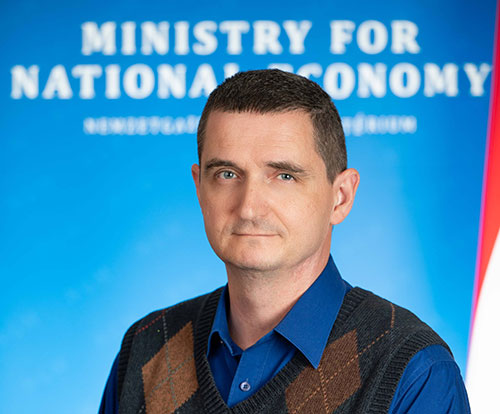
Dr. Tibor Bors Borbély-Pecze is a Hungarian expert in career guidance, lifelong learning policy, and employment services. With a PhD and habilitation in pedagogy, he has built a distinguished academic and policy-oriented career focused on the intersection of education, employment, and social development.
Workshop 1 (Hungary) | AI in Practice: Digital Career Literacy and Ethical Guidance Skills
Artificial intelligence is rapidly reshaping how Europeans learn, work, and navigate career transitions. This 90-minute interactive workshop equips career guidance practitioners with the practical skills needed to integrate AI and labour market intelligence tools into ethical, human-centred guidance practice. Participants will learn to critically evaluate AI-enabled tools, facilitate clients’ digital career literacy, and map human AI client journeys that protect autonomy and equity. Through hands-on activities, real European case examples, and ready-to-use facilitation techniques, the workshop demonstrates how practitioners can harness AI to widen access and enrich conversations—while safeguarding the core professional values of empathy, judgement, and contextual understanding.
Workshop 2 (Serbia) | Digital tools and Career Discovery - Exploring Careers Through Innovation
Step into the future of career guidance with our interactive workshop and instruments! This workshop explores how modern digital tools are transforming the way we think about career guidance and counselling (CGC) today. Participants will be introduced to standardized assessment tests that evaluate personality traits, interests, and both cognitive and practical competencies. In addition, the workshop highlights the use of cutting-edge VR headsets to simulate real work activities, offering innovative experiences that reflect specific job roles, helping young people discover occupations and specific work activities. Participants will not only learn about these tools, their purpose, and impact, but also attention will be given to the development process behind these innovations, as well as how they contribute to career guidance and counselling. Additionally, the positive and negative aspects of their use in practice will be explored, along with opportunities for further application through joint exchange. The workshop is designed as a space for exchange, demonstration, and discovery, providing participants with the opportunity to experience how technology can open new pathways in career planning. Finally, participants will have the chance to experience VR simulations in a real environment. Please note that this interactive component will be available only in Serbian. Join us to connect, explore, and experience the future of career guidance!
Jelena Stefanović, Milica Lekić, and Marko Cenić are dedicated professionals shaping the future of career guidance in Serbia within the Education to Employment project.


Milica, a career counsellor and youth worker, empowers young people, especially those facing vulnerabilities, through personalized mentoring, structured career guidance, and competency assessment, helping them build confidence and sustainable futures.

Marko (MA in Philology) career counsellor, specialized in SKA analysis, job profiling, and training design, supports youth and job seekers with practical and digital tools, and organizes career fairs and career workshops in schools. Together, they combine academic expertise, hands-on practice, and innovative approaches in the CGC field, supporting young people to make informed career choices.
Workshop 3 (Slovenia) | Digital Support with a Human Touch
Participants will use a structured Metaplan discussion to highlight key challenges and opportunities in digitally supported counselling, identifying where digital tools complement the counsellor’s work and where the human approach remains essential. Based on international exchange of good practices, they will develop recommendations for hybrid counselling that puts the user at the centre, which can be applied in different contexts. The purpose is to highlight the evolving role of employment counsellors in the digital age, where digital tools and artificial intelligence significantly support work but do not replace the human approach. Empathy, professional judgment, and ethical responsibility remain crucial, especially when working with vulnerable groups. Target Audience: professionals and counsellors in public employment services, experts and researchers in education and youth work, and other interested stakeholders. Format: visual presentation (introduction and project overview) followed by an interactive Metaplan workshop with discussion and practical activities (idea generation, structuring, and proposal development). Duration 90 minutes Focus A broader perspective on counselling challenges and experience exchange, where digital services (e-platforms, AI support, user profiling) increase accessibility and efficiency, while the counsellor’s role becomes more complex—especially in preventing long-term unemployment among vulnerable groups.

Sandra has contributed to the implementation of a digital service for employees—e-trainings—designed to enhance professional and digital competencies. She currently leads counsellor training within the project “Development and Implementation of a New Model of the Employment Service of the Republic of Slovenia with Strengthening of Digital Operations – New Service Model,” with a focus on strengthening counsellors’ professional roles and enabling effective digital communication with users.
Workshop 4 (Latvia) | AI-Enhanced Guidance and Innovative Presentations for Educators and Career Specialists
This interactive session explores how artificial intelligence can strengthen guidance practices, teaching strategies, and career support for young people in an increasingly digital world. Participants will gain practical frameworks for designing clear, engaging, and visually effective presentations using AI tools, along with structured guidance algorithms and measurable approaches that support data-informed career development work with students.
Led by Dace Briede-Zālīte, Training Director at a telecommunications company, accredited trainer, and professional with 17 years of international corporate leadership experience, the session integrates corporate AI application principles, performance metrics, and real-world decision frameworks into educational and guidance contexts. It demonstrates how methods used in business environments can be adapted to support learner engagement, clarity of instruction, and outcome tracking in schools and career services.
Attendees will leave with ready-to-use solutions, tested strategies, ethical AI guidelines, and practical measurement tools to evaluate impact and improve guidance effectiveness.

Dace holds a Chartered Institute of Personnel and Development Level 7 qualification in Human Resource Management from the University of Westminster (2024), and is a licensed international “Goal Mapping” trainer. She is the IAEVG national correspondent for Latvia and contributed to the Global Career Month European Conference panel in 2025. In recognition of her contribution to advancing career guidance and personal development, Dace Briede-Zālīte has been honoured with the Latvian National Career Guidance Award in 2020.
Workshop 5 (Poland) | From Test Results to Real Decisions - How to Interpret Digital Career Tools Responsibly
Digital assessments and online tools are widely used in career guidance, yet their real value depends on how results are interpreted and translated into decisions. This workshop focuses on moving beyond “test outcomes” toward meaningful, client-centred decision-making.

Workshop 6 (Croatia) | From Digital Hobbies to Career Capital: Informal Learning, Transferable Skills and Networks in The Digital World
Hobbies are forms of free-time activities which play a crucial role in our wellbeing. In the digital age, we increasingly develop skills, identities and networks through interest-driven online activities such as gaming, content creation, app-based skill learning, online communities and collaborative platforms. Today, more hobbies have a connection to the digital world, even if they are performed strictly offline, as those who enjoy them are regularly part of specialised online communities and interest groups. Career practitioners are in a unique position to recognise, encourage and support their clients in building transferable skills and networks through their digital hobbies. This interactive workshop will explore how career practitioners can identify, validate and strategically leverage hobbies as origins of informal learning, skill development and networking opportunities which lead to career development. We will examine how digital environments function as ecosystems for skill-building, peer learning and connecting. Through group reflection, skill-mapping exercises and practical tools, the workshop participants will develop strategies for discussing digital hobbies and integrating their clients’ digital experiences into guidance conversations. We will address the importance of intrinsic motivation, digital inequalities and the role of policy in recognising informal digital learning.

Workshop 7 (Czech Republic) | Career development and career portfolio in school curriculum - practical inspirations
This interactive workshop introduces a practical approach to career development in schools, with a particular focus on the use of a school-based career portfolio as a tool for supporting self-awareness, learning pathways, and future career choices. Participants will explore recent innovations and curricular reforms in the field of personal, social and career development in Czechia. We will work with an examples of methodological resources and materials designed for schools and educators. A part of the workshop will be hands-on activities, allowing participants to experience selected tools and portfolio techniques from the perspective of learners. Through practical exercises, discussion, and reflection, participants will gain ideas and inspiration for implementing career development activities and portfolio work in their own educational settings.
Workshop 8 (Portugal) | With or Without You: Do We Still Need Humans in Career Guidance?
In an era of rapid technological advancement with direct implications for the world of work, we are witnessing the rapid growth of programs and tools aimed at supporting individuals in making career-related decisions through Artificial Intelligence. Many of these systems are built around “user-friendly interfaces” simulating the interaction and relationship between a career counsellor and a client, leveraging sophisticated data-processing systems and algorithms that integrate information such as personal preferences, skills, interests, educational background, personality traits, and market trends. In light of this seemingly ‘miracle model,’ what is the role of the human professional, psychologist or counsellor, in career guidance? Inspired by a musical provocation (“With or Without You”), this workshop seeks to stimulate critical thinking among guidance professionals about the conscious, controlled, idiosyncratic, ethical, and responsible use of AI in their practice. Participants will be guided to create a Script/Checklist that ensures these core principles are upheld, all within a dynamic, relaxed, and... profoundly human environment.